
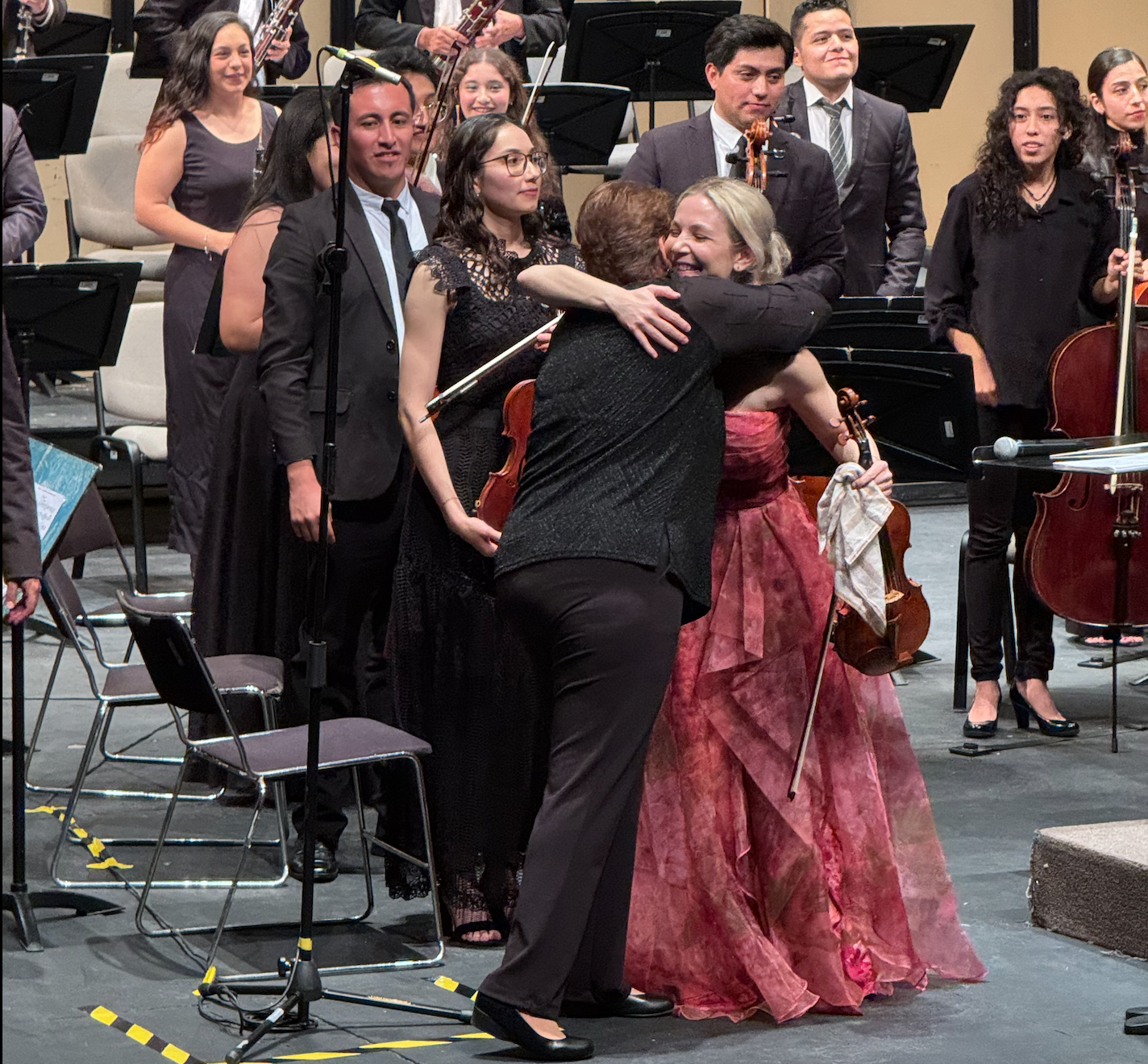
Xalapa, a city whose musical spirit is globally recognized through its designation as a UNESCO Creative City of Music, reaffirmed this status from November 9 to 15, 2025, by hosting the 8th edition of the CIBAR Festival. Established as Mexico's foremost classical music pedagogical event and an international reference, it once again showcased the virtuous cycle defining the Veracruz capital: a rich cultural infrastructure featuring world-class orchestras like the Xalapa Symphony Orchestra, which attracts the global artistic elite who, in turn, nurture new generations and enhance the city’s prestige. The guiding mission of this grand project is clear and ambitious:
"to promote and spread classical music by offering a cultural space that unites renowned artists and emerging talents, enriching the community's musical appreciation, fostering cultural exchange, and creating an environment of coexistence and artistic enjoyment."
This noble purpose came to life through the convergence of extraordinary masters and young musicians eager to learn, who brought the festival to fruition.
The heart of the festival: a gathering of masters and talents
More than a series of concerts, CIBAR is a melting pot where the wisdom of great masters shapes the future of musical interpretation. The essence of the festival lies in human interaction: the dialogue between an elite group of mentors and a new generation of performers.
A world-class faculty
The festival’s prestige is built on the careful curation of its faculty, reflecting a commitment to exposing Mexican talent to a global spectrum of pedagogical traditions. For this edition, a distinguished group of renowned artists and professors was assembled, whose origins illustrate the event’s caliber:
•From the United States:Masters from elite institutions such as theManhattan School of Music NYU / The New School Mannes and the Tianjin Juilliard School.
• From Canada and Europe: Artists from the Université de Montréal and world-renowned concert artists from Hungary and Cuba.
•National talent:The country’s excellence was represented by figures such asSantiago PiñeirúaConcert Soloist of Fine Arts and professor at thePanamericana University.
Young musicians: the future in training
The festival selected more than 100 participants from various Mexican states, as well as from countries such as France, England, and the United States. These young performers, who are at intermediate and advanced levels on their instruments, are the very reason for CIBAR's existence. The festival's educational model explicitly aims to "democratize access to high-level musical education," providing these emerging talents with a unique opportunity for learning and growth that would otherwise be unavailable.
Over seven intense days, this convergence of talent culminated in a vibrant program of learning and musical celebration.
A week of immersion: the CIBAR experience
The festival program combined rigorous pedagogical sessions with a dazzling lineup of concerts, offering a fully immersive experience in the art of sound.
The learning: master classes and lectures
The educational core of CIBAR centered on master classes, where each participant received at least two personalized sessions. This technical training was complemented by a series of lectures that presented a holistic view of the 21st-century musician. The program demonstrated profound insight into the profession by juxtaposing two seemingly disparate yet intrinsically connected topics: the opening lecture,“Mental Health and Self-Care”presented by psychologist Mariana Barradas, and a lecture by artistic director Moisés Barradas on"Prokofiev's Piano Concerto No. 2"This combination emphasized that mastering works with monumental technical demands requires developing the mental resilience necessary to perform them.
The celebration: unforgettable concerts
The week featured memorable musical moments showcasing the synergy among the masters, the local orchestras, and the audience. The culminating events are summarized below:
| Date | Artist(s) and Orchestra | Highlight |
| Sun., Nov. 9 | Jorge Luis Prats (piano) | A complete performance of the suiteIberiaby Albéniz, a true pianistic Everest and a milestone of the modern repertoire. |
| Mon., Nov. 10 | Participants of the CIBAR Festival 2025 | Participants from Mexico and France performed a solo piano recital. |
| Tue., Nov. 11 | Participants of the CIBAR Festival 2025 | Piano and chamber music participants made their debut in Xalapa. |
| Wed., Nov. 12 | Santiago Piñeirúa (piano) | A masterful recital featuring Chopin's 24 Preludes and Mozart's Sonata in C major. |
| Thu., Nov. 13 | Chloé Kiffer (violin) and Betania Johnny (violin), accompanied by the Veracruz State Youth Symphony Orchestra (OSJEV) | A virtuosic performance of Max Bruch's Violin Concerto No. 1, highlighting a vibrant dialogue between the soloists and the young orchestra. |
| Fri., Nov. 14 | Alexandre Moutouzkine (piano) and the Xalapa Symphony Orchestra (OSX) | A performance of the monumental and notoriously challenging Prokofiev Piano Concerto No. 2. |
| Sat. Nov 15. | Gergely Ittzés (flute) with Guest Musicians: Jorge Óscar González and Diego Acosta | A closing recital that combined flute virtuosity with chamber music, showcasing a dialogue between the canonical repertoire (Bach, Paganini, Debussy, Fauré) and compositions by the soloist. |
At the end of the week, with the closing ceremony and diploma presentation, it became clear that the CIBAR Festival is much more than a series of events: it is a project with a profound cultural legacy.
A legacy that resonates
The 8th edition of the CIBAR Festival was not merely a week of music; it was a testament to the power of cultural ecosystems. It demonstrated that when local heritage and institutional infrastructure are leveraged to attract global excellence, the result is not just a fleeting event but a lasting legacy that redefines a city’s artistic identity to the world. By strengthening the connection between established artists, emerging talents, and the institutions that support them, the festival directly nurtured Xalapa’s vocation as a Creative City. This effort, backed by key entities such as the System for Support to Creation and Cultural Projects (SACPC) of the Ministry of Culture, also stems from the union of will and efforts of public and private institutions that believe in the transformative power of music, including the Higher Institute of Music of the State of Veracruz, Café Bola de Oro, TenarisTamsa, Música de Casa Pozo Azul, the Higher Center of Tourism Studies of Xalapa, and other dedicated partners who have come together to make this monumental project possible.
Thanks to this network of conviction and deep commitment, CIBAR is established as an indispensable pillar not only for the Veracruz community but also for the musical landscape throughout Mexico.